IMPRESSION: 1.4 cm PI-RADS 4 lesion in the left posterior lateral peripheral zone in the mid prostate. Recommend biopsy.
PATHFINDER / AUTOMATIC RAD–PATH CORRELATION / PHI NEVER LEAVES YOUR NETWORK
Radiologists work in the dark
PATHFINDER lights the way
A radiologist makes a finding; a biopsy holds the answer — the system buries it
in the EHR.
PATHFINDER automatically links each pathology report to prior
radiology reports, turning outcomes you'd never see into measured accuracy,
peer learning, and CME credit.
// See what you are missing.
DIAGNOSIS:
PROSTATE - left peripheral zone: adenocarcinoma, Gleason score 3+4=7, involving 2 of 3 cores.
01
THE PROBLEM
A radiologist makes a finding and recommends biopsy. The answer arrives days later — and the radiologist never sees it.
/01
The best teacher is inaccessible Your own outcomes are the most instructive feedback in medicine — and they vanish into the EHR
/02
Manual follow-up doesn't scale Chart-by-chart correlation is impossible for the thousands of exams you read in a year
/03
Accuracy goes unmeasured Without systematic rad–path correlation, PI-RADS performance is a gut feeling, not a number
02
HOW IT WORKS
Follow one case through
the pipeline
PATHFINDER plugs into the report streams you already generate — a live HL7 feed means reports are available as soon as they are signed. No workflow changes, no manual tagging, no cloud.
-
DAY 0
The finding
CT abdomen:
1.3 cm mass in the proximal jejunum, concerning for malignancy. Biopsy recommended.
PATHFINDER ingests the report from the HL7 feed and extracts jejunum mass malignancy as biomedical concepts — grounded in UMLS and SNOMED CT, not keyword matching.
-
WEEKS LATER
The answer arrives — somewhere else
Pathology:
SMALL BOWEL, BIOPSY - heterotopic pancreas.
The radiologist remains in the dark.
PATHFINDER processes the pathology report: small bowel heterotopic pancreas
-
INSTANTLY
PATHFINDER makes the match
The matching engine links the biopsy to the prior imaging from the same patient — PATHFINDER knows that jejunum is_part_of small bowel via relationships defined in the UMLS.
✓ match · rad #74183 ↔ path #81627
-
NEXT LOGIN
Everyone learns
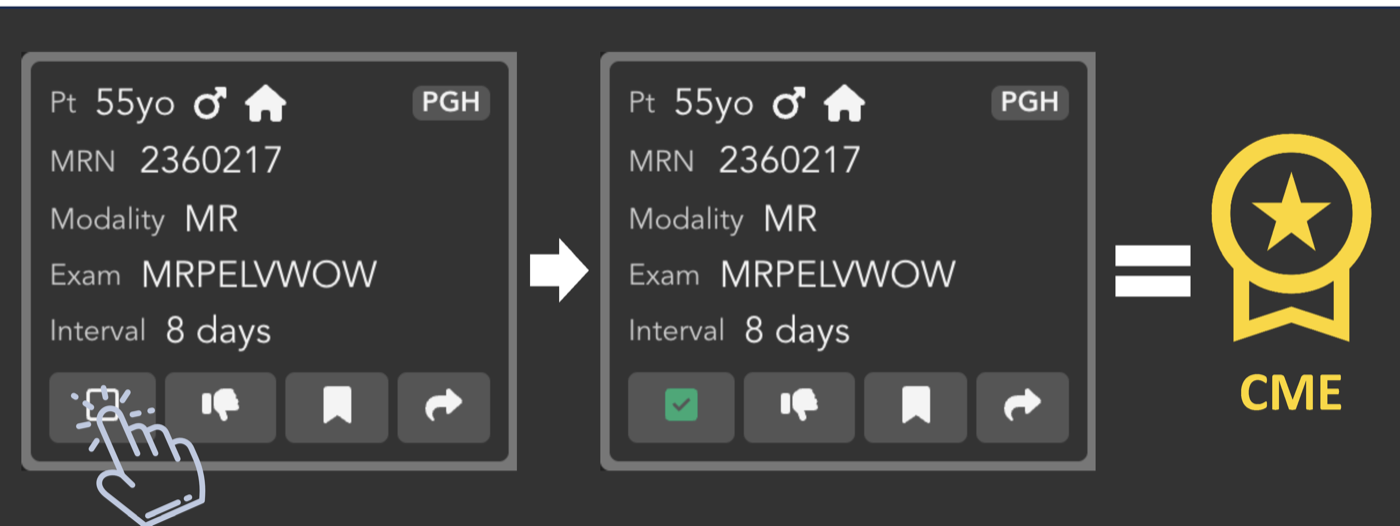
The radiologist reviews the match and earns CME for their effort. Department analytics quietly gain one more data point of measured, outcomes-based accuracy.
CME credit accuracy stats peer learning
03
WHO USES IT
One pipeline
Four different jobs
ACR DICOE · ADVANCED CRITERIA
Rad–path correlation is now an ACR Center of Excellence criterion
The ACR lists Radiology–Pathology Correlations among the advanced criteria for its Diagnostic Imaging Center of Excellence designation — the optional domains that earn the With Distinction and Pinnacle tiers. It's optional largely because doing it by hand doesn't scale. PATHFINDER makes it automatic.
ACR Diagnostic Imaging Center of Excellence →
CHIEFS & MEDICAL DIRECTORS
Run the department on evidence
Group-level performance for PI-RADS, BI-RADS, LI-RADS, Lung-RADS, TI-RADS and more — see who excels and who needs coaching.
Hard numbers for accreditation — now including the ACR's DICOE rad–path criterion — quality assurance, and payer conversations. A peer-learning program that runs itself. And a deployment your IT and compliance teams can quickly approve.
RADIOLOGISTS
Learn from every case you read
Your rad–path matches arrive automatically — no chart digging or hoping your colleague reading the follow-up reaches out. Earn CME credit for follow-up you already want to do.
Track your own accuracy over time, and see only cases where you took part in the patient's care. Privacy by relationship, by design.
RESIDENTS
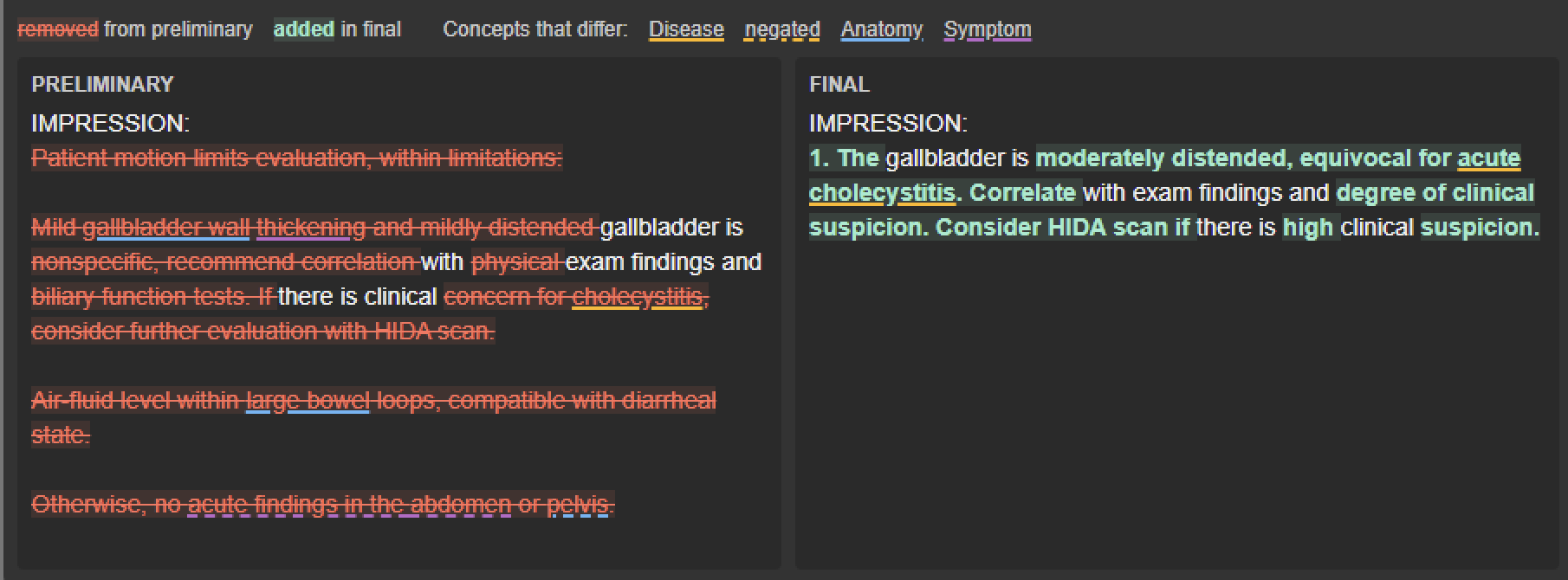
Share cases & track changes
Get the same path follow-up on cases you've prelim'd as the attendings who finalized them.
Share cases with your colleagues, and find path-proven examples to build confidence on call.
Compare prelim & final report versions to highlight attending changes and develop your voice.
QUALITY & SAFETY LEADERS
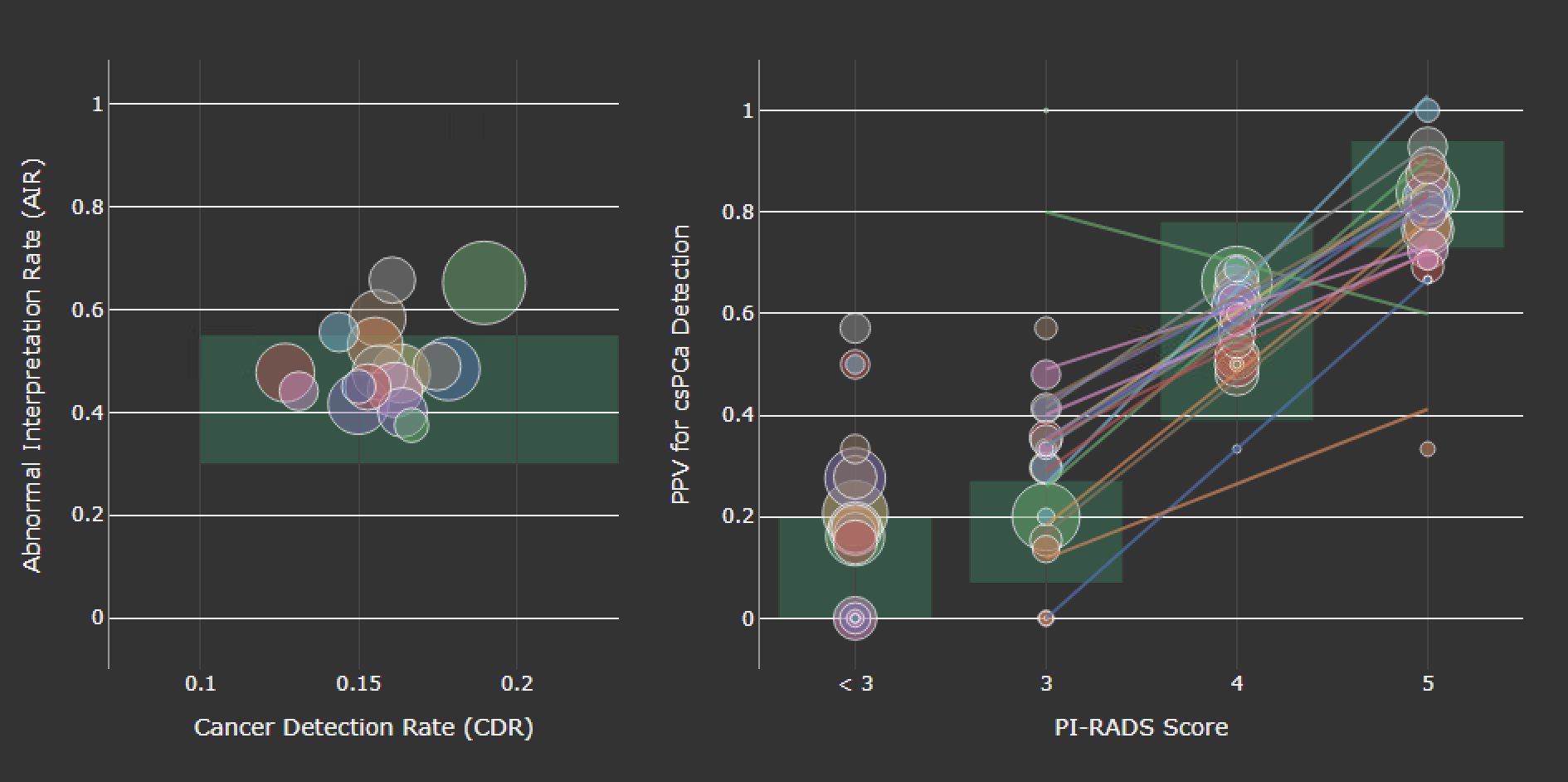
QA powered by outcomes, not anecdotes
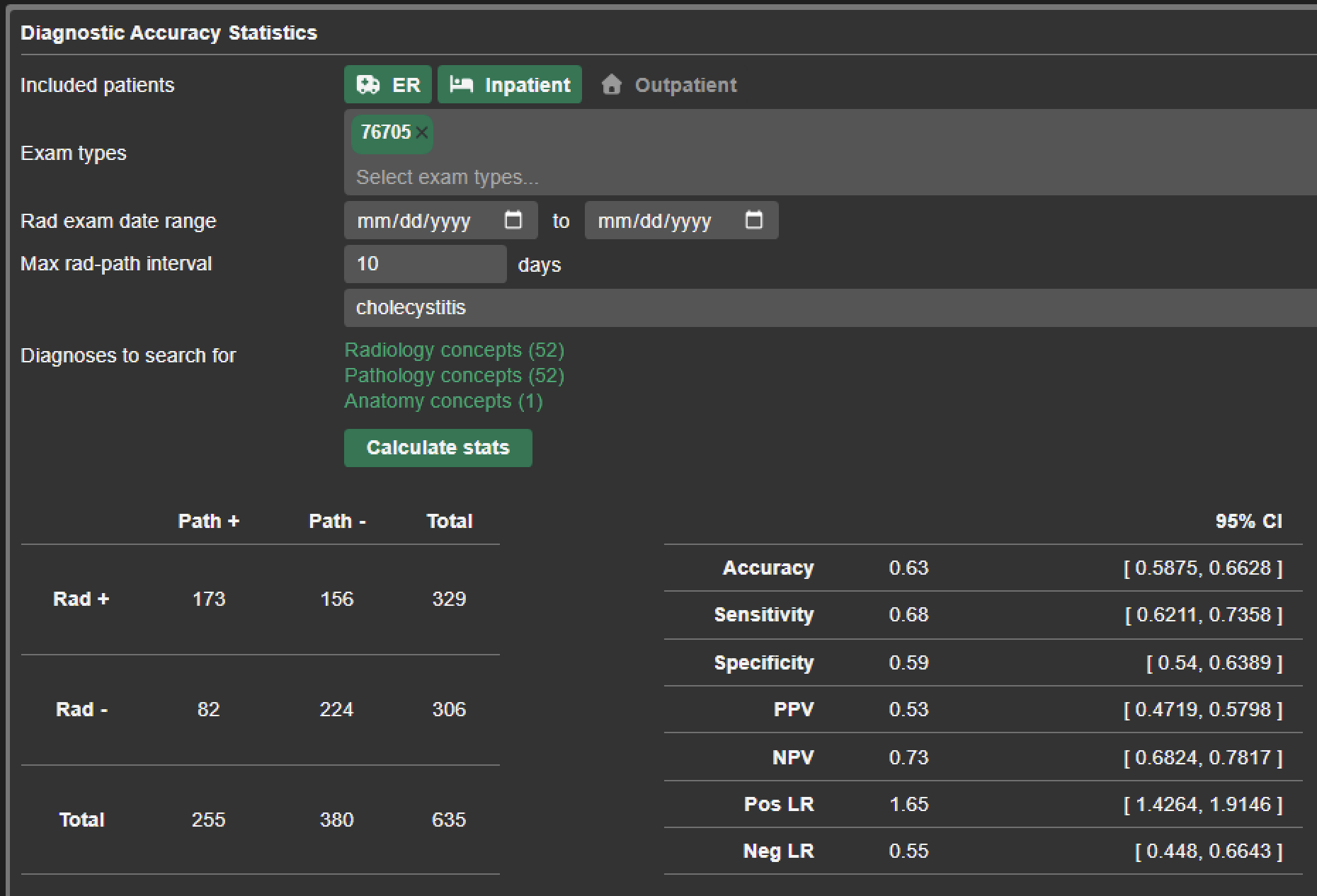
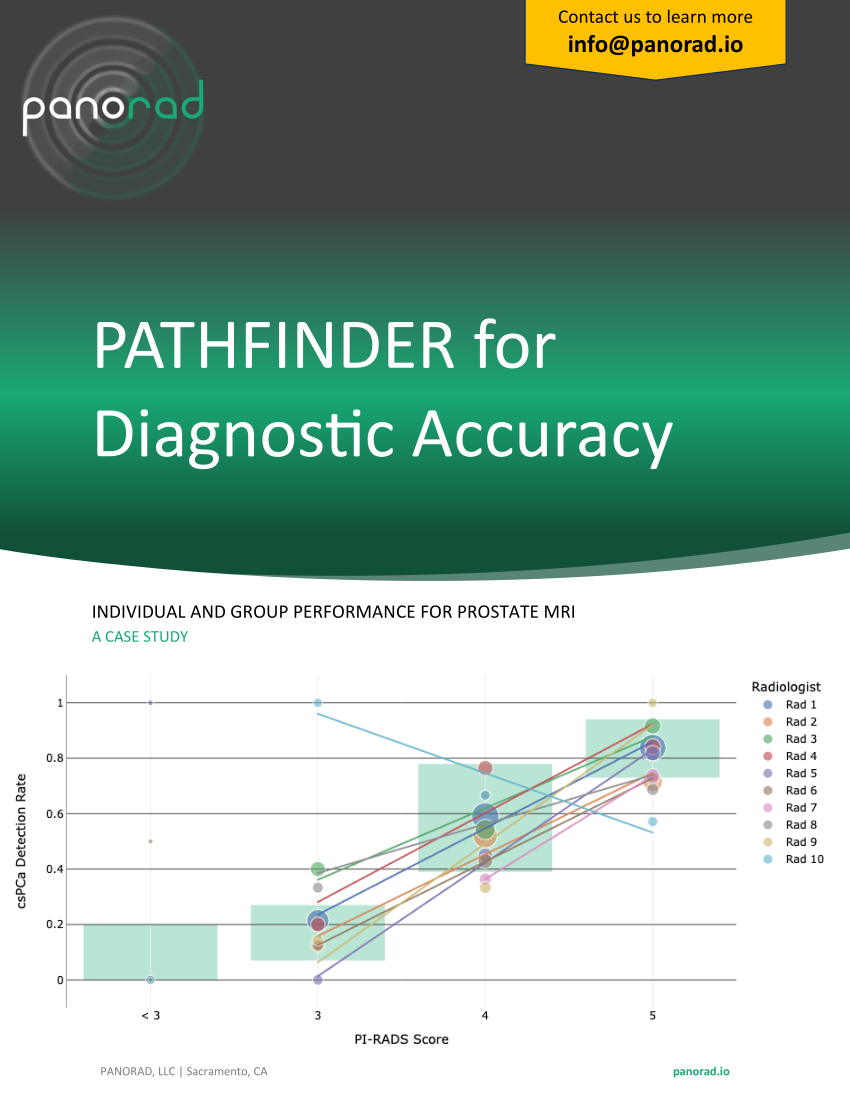
Sensitivity, PPV, and cancer detection rate by radiologist, exam type, and patient class — drill-down from any statistic to the exact cases behind it.
Track cancer detection and abnormal interpretation rates over time. Structured data collection shaves months off of QI and research projects.
04
THE PRODUCT
The finding and the answer
on one screen
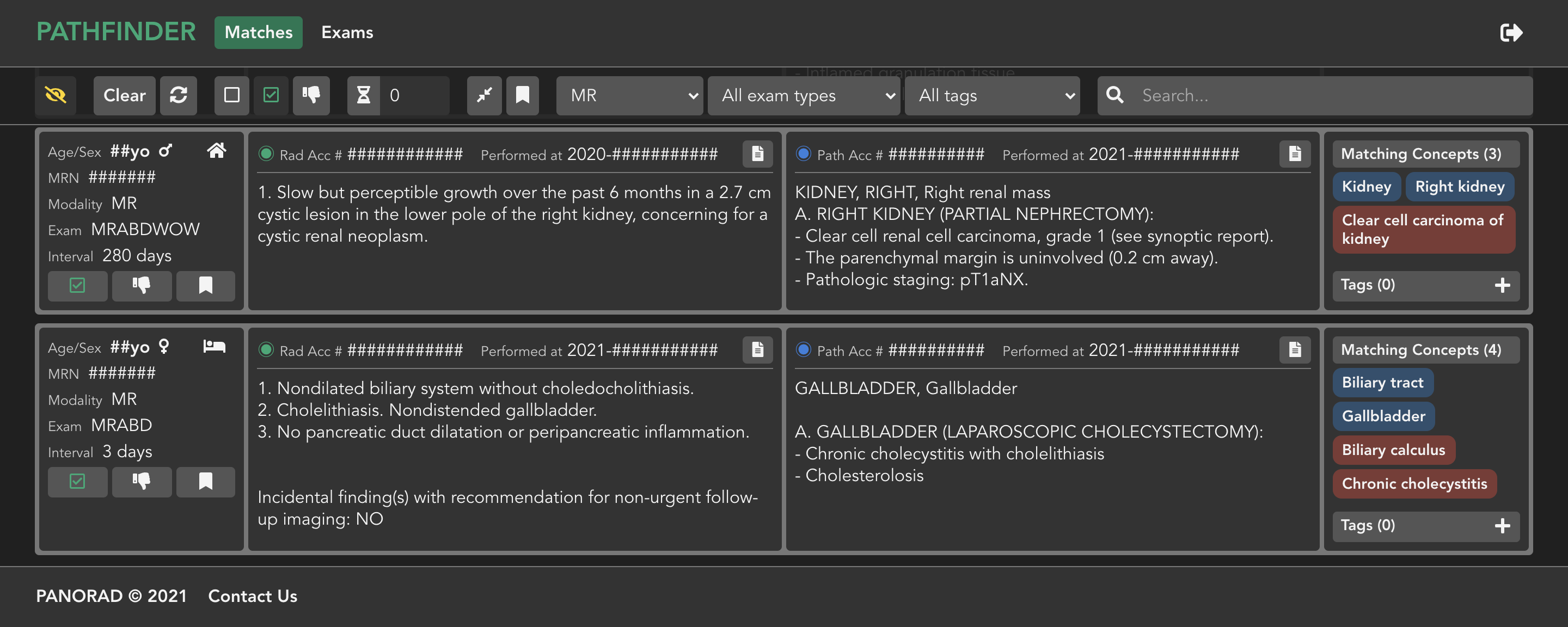
A fast, low-light, reading-room-friendly interface. Radiology and pathology reports side by side, matching concepts linked, & one click to launch the study in PACS
MATCHES
Automatic rad–path matching
Every pathology report matched against prior imaging from the same patient — a repository of path-proven cases
EXAMS
Every case you've read
All of your reports, regardless of path follow-up — tag for teaching files, publications, and case conference
INSIGHTS
Diagnostic accuracy analytics
Cancer detection rate, sensitivity, and PPV, always up-to-date, linked to the exact cases
CME
CME built into the workflow
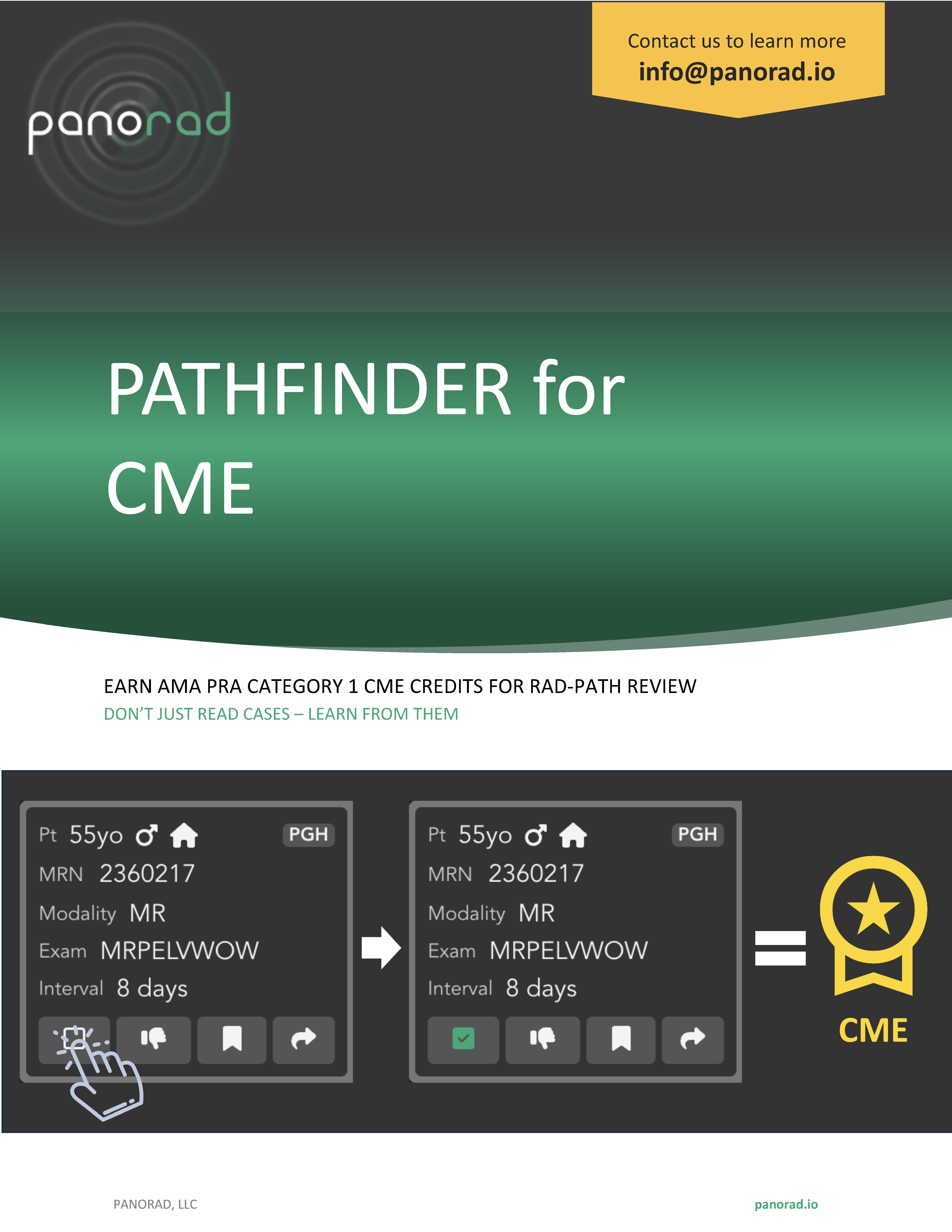
AMA PRA Category 1 credit for reviewing your own rad-path — CME guaranteed to be relevant because it is built from your cases
GROUPS
Collect cases to share
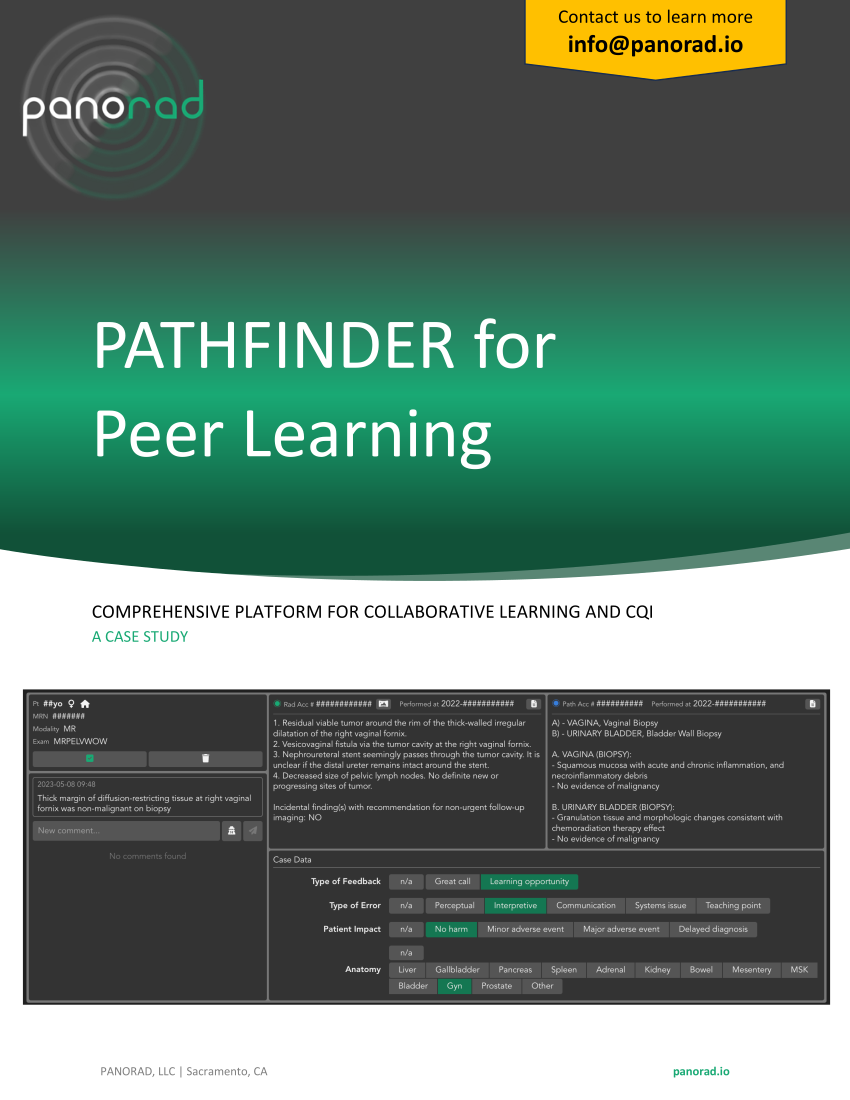
Share matches & exams in a safe, collegial forum, launch the images in PACS, and collect structured data for QI and research
05
SECURITY & TRUST
Your data never leaves
your network
The entire application and NLP pipeline run locally, on infrastructure you control — this is the deployment review your IT security team hopes to read.
And privacy is built-in: users only see cases where they have an established care relationship with the patient — your reports, your patients.
✓ PHI egress none
✓ processing on-prem
✓ NLP pipeline local · UMLS / SNOMED CT
✓ access model care relationship
✓ cloud dependency none
✓ data control yours, completely
+
RESOURCES
PATHFINDER in practice
Take one to your group
How do you follow up?
We'll show you PATHFINDER running on realistic data and walk through what deployment looks like inside your network
// Meet us at the ACR Quality & Safety + Informatics Conference · Oct 16–17, 2026 · Atlanta